The conceptual water treatment system is being developed by the WDRWS engineering team. As a majority of WDRWS Members use groundwater, fully treated water is planned for the system with a water treatment plant near the proposed intake in Lake Oahe. Due to differences in treatment regulations, groundwater systems generally do not have the capability to treat surface water, so the initial concept will provide all Members with fully treated potable water.
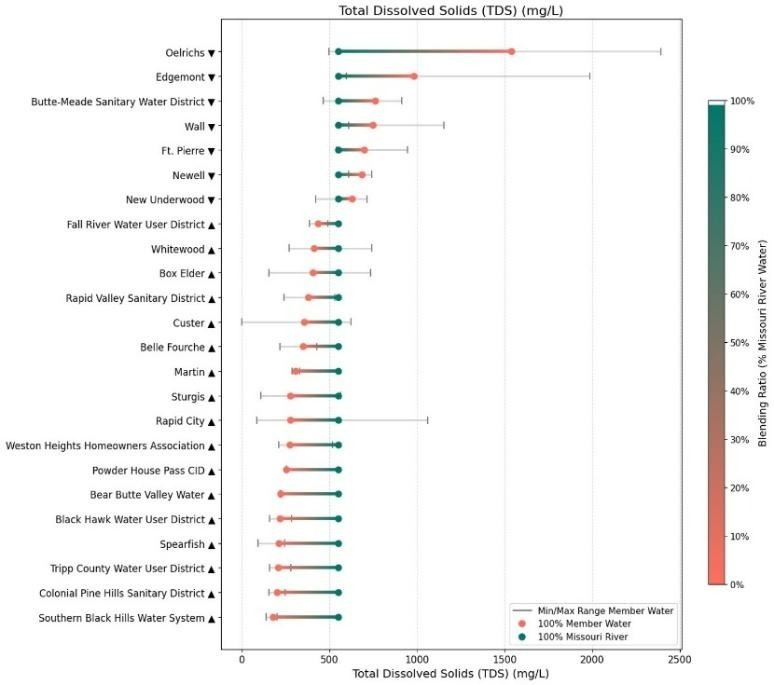
Initial efforts for the water treatment system concept are focused on collecting Members’ existing water quality data and comparing it to Lake Oahe water quality data to establish water treatment goals and objectives. This will allow the team to ensure the treated water is compatible with existing water supplies. Data collection from Member systems began in 2025.
The engineering team collected samples from Lake Oahe and completed laboratory bench-scale testing to evaluate potential disinfection processes. Initial results indicate that naturally occurring organic matter in the Missouri River may create some water quality compatibility challenges when blending Missouri River water with the groundwater most Members use. The engineering team expected this, as the results are consistent with the water quality all water systems using Missouri River water generally produce.
To further evaluate the impacts organic matter may have on treatment, the engineers are developing concepts to test treatment processes by completing a pilot study in 2026. Pilot studies simulate treatment processes on a small scale to determine the most effective and cost-efficient options.
Mid-Dakota Rural Water System has an intake in Lake Oahe like the one conceptualized for WDRWS, with water quality that is expected to be similar. Representatives from Mid-Dakota have expressed a willingness to provide a raw water supply for the WDRWS pilot study.
Once the treatment goals and objectives are defined based on collected water quality and testing results, the engineering team will develop two treatment alternatives for recommendation based on capital, or initial investment costs, as well as operation and maintenance costs. The conceptual design for the WDRWS water treatment system is expected to be completed in the latter half of 2026.